Why a vintage bird bath brings structure, beauty, and life to the garden year-round.

The Appeal of Antique Bird Baths
Among vintage garden ornaments, the bird bath occupies a unique position. It is simultaneously functional and sculptural, a piece that earns its place through both purpose and beauty. While statuary and urns exist purely as ornament, a vintage bird bath draws wildlife into the garden, providing water for drinking and bathing year-round.
This combination of aesthetic and practical value explains why vintage bird baths have remained desirable for generations. A vintage stone bird bath catching winter light, its basin visited by robins and blackbirds, offers something no purely decorative piece can match.
Stone Bird Baths
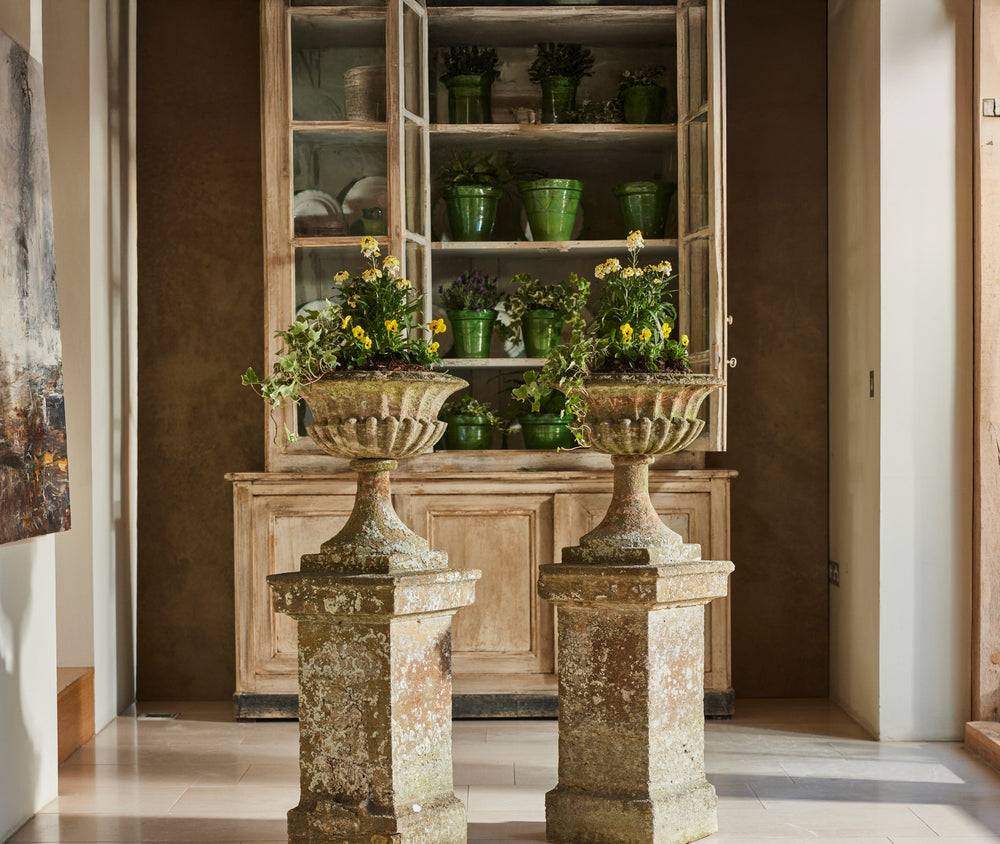
Vintage stone bird baths, whether carved from limestone, sandstone, or marble, develop beautiful patinas over time. Lichen and moss soften their appearance, while mineral deposits from years of standing water add depth and character. A stone bird bath that has weathered decades in an English garden possesses a presence that no reproduction can match.
The weight and solidity of stone bird baths give them permanence. They anchor a space, providing year-round structure when planting recedes. In winter especially, a vintage stone bird bath becomes a focal point — its form revealed more clearly against bare borders.
Lead Bird Baths
Lead bird baths acquire a distinctive silvery-grey patina that complements both foliage and stonework beautifully. The malleability of lead allowed craftsmen to create more ornate designs than stone permitted — shells, foliage, and decorative rims feature prominently in vintage lead bird baths from the eighteenth and nineteenth centuries.
The soft gleam of aged lead works particularly well in shaded positions, where it catches filtered light. Vintage lead bird baths suit formal and informal settings equally, their material lending quiet distinction without demanding attention.
Cast Iron Bird Baths
Victorian and Edwardian cast iron bird baths often feature ornate designs — acanthus leaves, classical motifs, and elaborate pedestals. Over time, cast iron weathers to a texture that speaks of age and permanence, its surface acquiring the subtle variations that only decades of exposure can provide.
Vintage cast-iron bird baths bring architectural presence to the garden. Their weight and substance suit both period properties and contemporary settings that require a single statement piece.
Placing a Vintage Bird Bath
The placement of a vintage bird bath deserves careful thought. Unlike statuary, which can be partially concealed or discovered unexpectedly, a bird bath benefits from visibility — both for the gardener who wishes to watch visiting birds, and for the birds themselves, who prefer clear sightlines to spot approaching predators.
Position a vintage bird bath where planting softens its edges without obscuring it entirely. The meeting point of borders, a clearing within a walled garden, or a focal point visible from the house all work well. Consider too how the bird bath will read in winter, when its structural presence becomes most valuable.
A vintage bird bath does not look placed. It looks as though it has always been there. For gardens intended to mature over generations, this sense of permanence and belonging is precisely what gives vintage garden ornaments their enduring appeal.